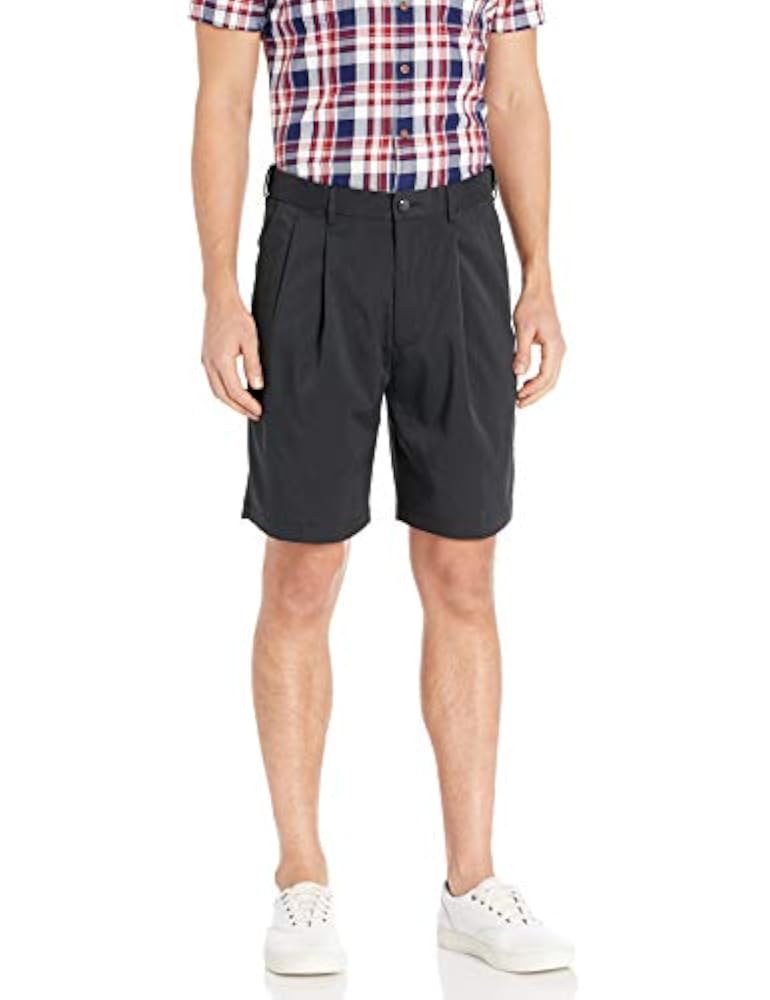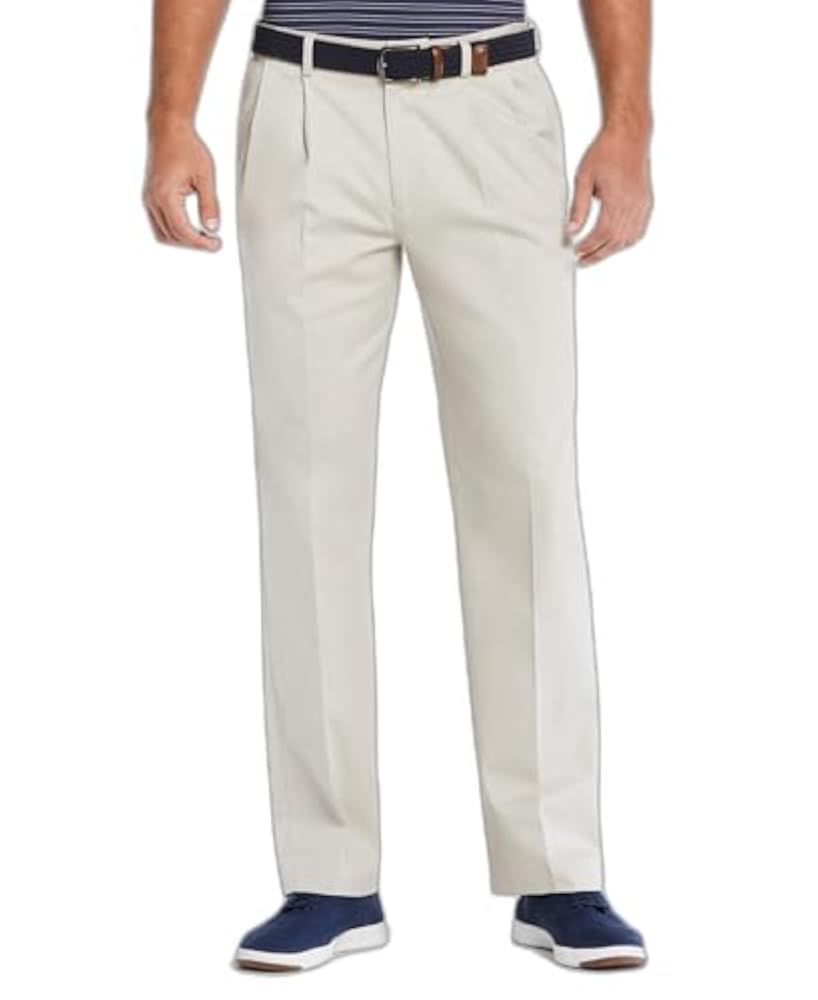
Ultimate Performance Pleated Chino Pants with Expandable Waist
4.4 out of 5 from 1943 ratings
$29.84 - $79.99
- Classic
- Pleated
- Hidden Expandable
Waist 30 to 60, inseam 29 to 34 · 5 colours
Cut
The choice is usually described as formal against modern. In wear it is simpler than that: it is about what happens to the cloth across your lap when you take a seat.
A pleat is folded cloth held at the waistband. When you sit, your hips and thighs spread, and the pleat opens to give that spread somewhere to go. Stand up and it settles closed again. Without one, the extra room has to come from cutting the whole trouser fuller, which shows in the leg as well as the seat.
That is why pleats persist in business trousers and in wider waists. The men who sit for a living and the men who need more room through the hip get the most from them.
A flat front has no folded reserve, so it lies smooth from the belt down. Under an untucked shirt or a fitted jacket it reads cleaner, and it stays clean as long as the waist is not being asked to stretch. Pull a flat front tight across a seated lap and it pulls into diagonal lines from the pocket, which is the look everyone is trying to avoid.
An expanding waistband helps here more than it does with pleats, because the give happens at the band rather than in the cloth over the lap.
If most of your day is seated, or if you are between waist sizes and expect to move between them, pleats are the forgiving answer. If you spend the day upright, wear your shirt tucked and like the front clean under a belt, take the flat front.
Neither one is dressier than the other any more. The cloth and the crease do far more for how formal a trouser reads than the front does.
4.4 out of 5 from 1943 ratings
$29.84 - $79.99
Waist 30 to 60, inseam 29 to 34 · 5 colours
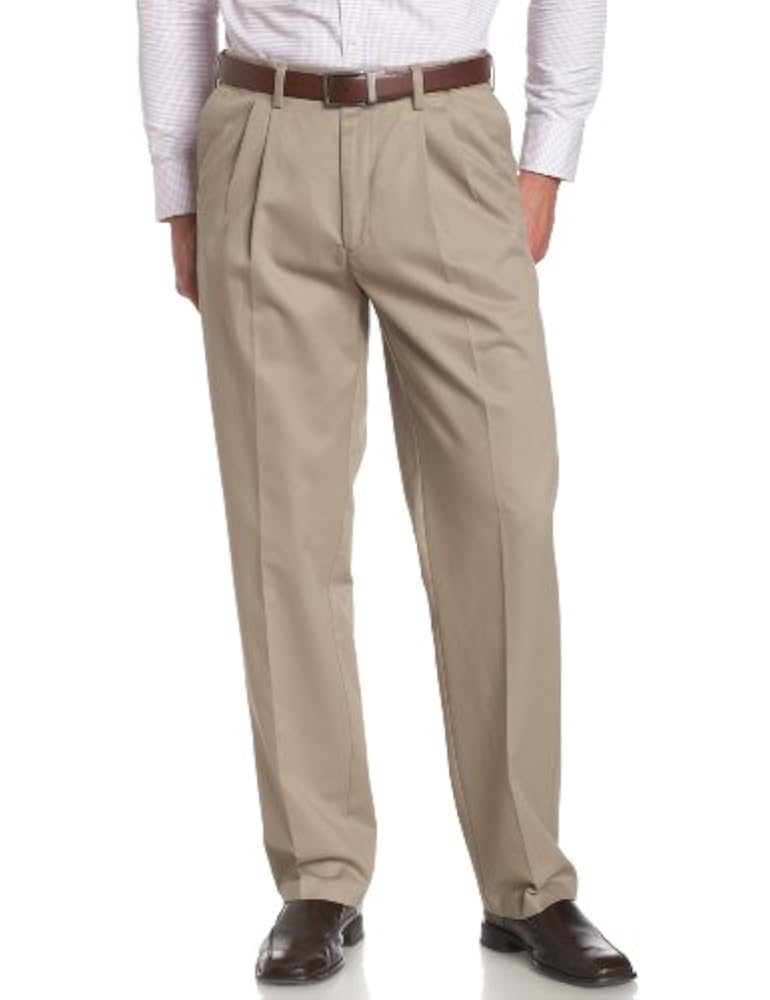
4.4 out of 5 from 1437 ratings
$25.39
Waist 38 to 38, inseam 34 to 34
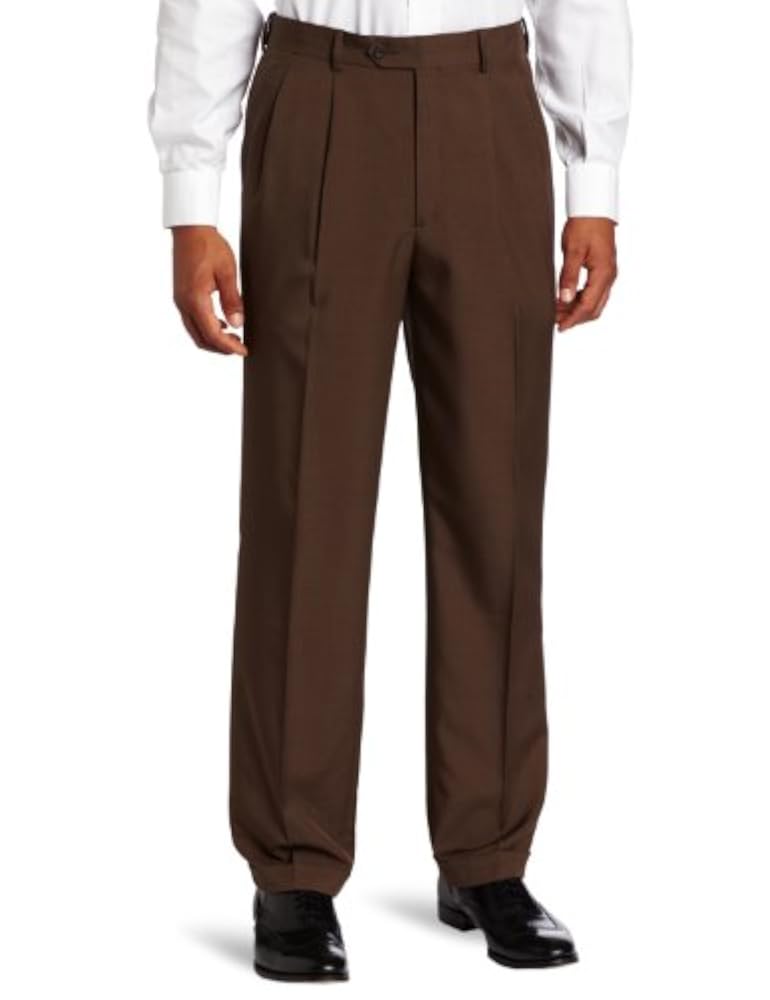
4.4 out of 5 from 919 ratings
$64.99
Waist 42 to 42, inseam 30 to 30